- Description
-
- Creator(s)
- Thomas Girtin (1775-1802)
- Title
-
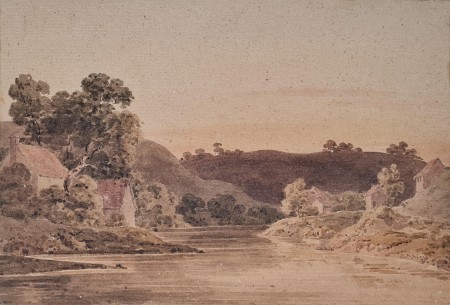
- A River View with Buildings, Probably in Yorkshire
- Date
- (?) 1799 - 1800
- Medium and Support
- Graphite and watercolour on wove paper
- Dimensions
- 13.5 × 20 cm, 5 ⁵⁄₁₆ × 7 ⅞ in
- Object Type
- Colour Sketch: Studio Work
- Subject Terms
- River Scenery; Yorkshire View
-
- Collection
-
- Preston Park Museum and Grounds, Stockton-on-Tees
- (TG_1976.0122)
- Catalogue Number
- TG1590
- Description Source(s)
- Viewed in October 2025
Provenance
Edwin Clephan (1817–1906); then by descent to Annie Elizabeth Clephan (1854–1930); bequeathed to Stockton Council, 1930; displayed in the Museum from 1953
Other entries in Late Watercolours:
Samuel William Reynolds and Painting for the Art Market

An Imaginary City, with Antique Buildings
Rhode Island School of Design Museum, Providence

Ancient Ruins, with an Obelisk
Yale Center for British Art, New Haven

Ancient Ruins, with a Gothic Church
National Gallery of Scotland, Edinburgh

A Classical Composition, with a Church and Column
Walker Art Gallery, National Museums Liverpool

The Arch of Janus, Rome
Yale Center for British Art, New Haven

The Temple of Clitumnus
Yale Center for British Art, New Haven

Rome: The Temple of Antoninus and Faustina
Yale Center for British Art, New Haven

Rome: The Temple of Saturn, with the Arch of Septimius Severus
Fine Arts Museums of San Francisco

A Town on an Estuary
Rhode Island School of Design Museum, Providence
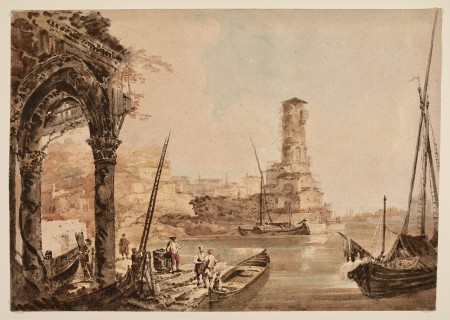
A Lagoon Capriccio
Birmingham Museums & Art Gallery

An Unidentified Coastal Landscape with a Windmill
Lady Lever Art Gallery, Port Sunlight


Barnard Castle, from the River Tees
Bowes Museum, Barnard Castle

A Farmhouse, Said to Be near Newcastle-upon-Tyne
Yale Center for British Art, New Haven

An Exterior View of the Ruins of Lindisfarne Priory Church
Lindisfarne Priory, Northumberland (English Heritage)

Kelso Abbey: The West Front
The Whitworth, The University of Manchester

Jedburgh Abbey, from the Riverbank
The Higgins, Bedford


On the River Medway, with a Boatyard, Beached Vessels and Hulks
Private Collection

Bisham Abbey, on the River Thames
Private Collection

A Classical Composition, with Figures Admiring the Sculptures
The Whitworth, The University of Manchester

An Unidentified Ruin next to a Bridge over a Stream, Said to Be Furness Abbey
Touchstones Rochdale

The Gatehouse of Morpeth Castle
Yale Center for British Art, New Haven

Buildings on the River Nidd, near Knaresborough
British Museum, London
A River View with Buildings, Probably in Yorkshire
Preston Park Museum and Grounds, Stockton-on-Tees


Kirkstall Abbey, from Kirkstall Hill
British Museum, London

Kirkstall Abbey, from Kirkstall Bridge, Morning
Victoria and Albert Museum, London

Kirkstall Abbey, from the Canal, Evening
Private Collection

A Distant View of Kirkstall Abbey
Williamson Art Gallery & Museum, Birkenhead

A Village Scene, Probably Finchingfield in Essex
Yale Center for British Art, New Haven

Wetherby Bridge and Mills, Looking across the Weir
The Museum of Fine Arts, Houston

Wetherby: Looking through the Bridge to the Mills
British Museum, London

Wetherby: Looking through the Bridge to the Mills
Leeds Art Gallery

Kirk Deighton, near Wetherby
The Whitworth, The University of Manchester


York: The New Walk on the Banks of the River Ouse
Victoria and Albert Museum, London

York: The Layerthorpe Bridge and Postern
The Whitworth, The University of Manchester

York: The Layerthorpe Bridge and Postern
Private Collection

York Minster from the South East, Layerthorpe Bridge and Postern to the Right
Private Collection


A Farmyard with Barns, Ladder and Figures; A Sky Study
Courtauld Gallery, London

Ripon Minster, with Skellgate Bridge
Yale Center for British Art, New Haven

Ripon Minster, with Skellgate Bridge
Leeds Art Gallery

Ripon Minster, with Skellgate Bridge
Blackburn Museum and Art Gallery

A Distant View of Ripon Minster, from the River Skell
Private Collection

Ripon Minster, from the South East
National Gallery of Scotland, Edinburgh

Ripon Minster, from the South West
Private Collection

The Abbey Mill, near Knaresborough
Yale Center for British Art, New Haven


A Mountain Stream in Spate, Possibly the River Wharfe
Private Collection

Bolton Abbey: The East End of the Priory Church from across the River Wharfe
Eton College, Windsor

Bolton Abbey: The East End of the Priory Church, from across the River Wharfe
National Museum of Wales, Cardiff

Bolton Abbey: The East End of the Priory Church, from across the River Wharfe
Leeds Art Gallery

Bolton Abbey, from the River Wharfe
Private Collection

Bolton Abbey, from the River Wharfe
Private Collection

The Banks of the River Wharfe, with Bolton Abbey in the Distance
Private Collection

Stepping Stones on the River Wharfe, near Bolton Abbey
National Gallery of Scotland, Edinburgh

Stepping Stones on the River Wharfe, near Bolton Abbey
National Gallery of Victoria, Melbourne

Storiths Heights, near Bolton Abbey, from the River Wharfe
Fitzwilliam Museum, University of Cambridge

Richmond Castle, from the River Swale
Leeds Art Gallery

A Farmhouse in Malhamdale, Known as 'Kirkby Priory, near Malham'
British Museum, London


An Ancient Oak, Said to Be on the River Ure
Private Collection

Cottages at Hawes, from Gayle Beck
Birmingham Museums & Art Gallery

Cottages at Hawes, from Gayle Beck
Private Collection, Norfolk

Cottages at Hawes, from Gayle Beck
Private Collection

Cottages at Hawes, from Gayle Beck
Ashmolean Museum, University of Oxford
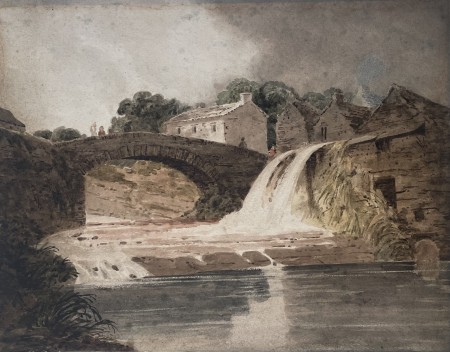
Cottages at Hawes, from Gayle Beck
Ferens Art Gallery, Hull

Guisborough Priory: The Ruined East End
Tate, London

A Distant View of Guisborough Priory; The Tithe Barn, Abbotsbury
Private Collection, Norfolk

A Distant View of Guisborough Priory
Yale Center for British Art, New Haven

A Distant View of Guisborough Priory
Yale Center for British Art, New Haven


A Farmhouse, Said to Be near Newcastle-upon-Tyne
Private Collection

A Farmhouse, Said to Be near Newcastle-upon-Tyne
Laing Art Gallery, Newcastle-upon-Tyne
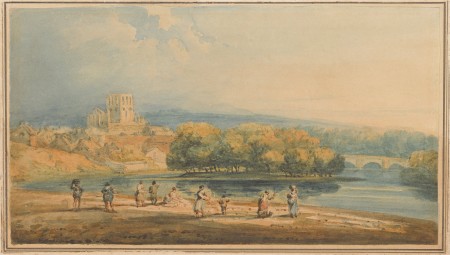
Kelso Abbey, from the River Tweed
Private Collection




Warkworth Castle, from the River Coquet
Yale Center for British Art, New Haven

An Upland Landscape, Said to Show Etal Castle
Victoria and Albert Museum, London


The River Tweed at Kelso, Looking Upstream
Courtauld Gallery, London


The Eildon Hills, from the River Tweed
Fitzwilliam Museum, University of Cambridge

A Distant View of Dryburgh Abbey, with the Eildon Hills Beyond
Private Collection

The Valley of the Tweed, with Melrose Abbey in the Distance
Private Collection

Jedburgh Abbey, from Jed Water
Fitzwilliam Museum, University of Cambridge

Jedburgh Abbey, from the South East
Yale Center for British Art, New Haven

The Village of Jedburgh
National Gallery of Scotland, Edinburgh

Southampton: The South Gate and Old Gaol
Private Collection

Bristol Harbour, with St Mary Redcliffe in the Distance
Bristol Museum & Art Gallery

A Wharf with Shipping, Possibly at Bristol
Art Institute of Chicago

A Rainbow over the River Exe
National Gallery of Ireland, Dublin

A Rainbow over the River Exe
The Huntington Library, Art Museum and Botanical Gardens, San Marino


Lydford Castle, from the River Lyd
Clark Art Institute, Williamstown

St Vincent’s Rocks and the Avon Gorge
The Whitworth, The University of Manchester

On the River Taw, North Devon, Looking from Braunton Marsh towards Instow and Appledore
National Gallery of Art, Washington


Conwy Castle, from the River Gyffin
Private Collection, Norfolk

Chelsea Reach, Looking towards Battersea (The White House, Chelsea)
Tate, London

Chelsea Reach, Looking towards Battersea
Private Collection, Norfolk

A Panoramic Landscape, with Figures Trawling a Pond
Private Collection

Landscape with a Distant Ridge
Yale Center for British Art, New Haven


An Inn Yard, Edgware Road, Paddington
British Museum, London

The Thames from a Window of the Old Toy Inn, Hampton Court
British Museum, London

The Old Cottage, Widmore, near Bromley
British Museum, London


Shipping on the River Medway
Museum of New Zealand, Wellington


A Farmyard, Probably Pinkneys Farm, Wimbish
Art Institute of Chicago

Farmhouse and Outbuildings, Possibly in Essex
Aberdeen Art Gallery

An Unidentified Village Street with a Church Tower in the Distance
British Museum, London

A Panoramic Landscape, Possibly Showing Primrose Hill, London
Private Collection

Unidentified Landscape with a Distant Rain Shower
National Museum of Wales, Cardiff

Warkworth Church, with the Bridge Beyond
Victoria and Albert Museum, London



An Italianate Landscape with Two Monks
Private Collection
Footnotes
- 1 The account of the ‘Rise and Progress of Painting in Water Colours’ written by William Henry Pyne (1769–1843) includes a wealth of detail on Girtin’s career and working practice, much of which was the result of watching the artist. It is transcribed in full in the Documents section of the Archive (1823 – Item 1).
Revisions & Feedback
The website will be updated from time to time and, when changes are made, a PDF of the previous version of each page will be archived here for consultation and citation.
Please help us to improve this catalogue
If you have information, a correction or any other suggestions to improve this catalogue, please contact us.
About this Work
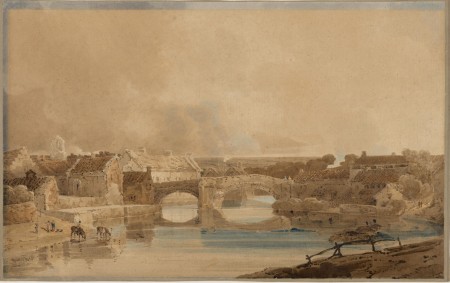
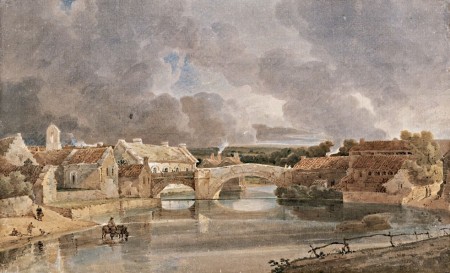
This view of an unidentified village on the bend of a river has not to my knowledge ever been mentioned in the Girtin literature and it is not included in the catalogue of the artist’s work by Thomas Girtin (1874–1960) and David Loshak (Girtin and Loshak, 1954). The composition is close to a view of another unidentified riverside village (TG1621) in the Whitworth Book of Drawings (TG1323–TG1324 and TG1600–TG1625) and I initially thought that it might have been detached from there. However, it is marginally smaller (13.5 × 20 cm compared with 14.6 × 21.7 cm) and I now believe that rather than being worked on the spot it was instead made in the studio with a minimum of means and with a dispatch that might appeal to the type of collector who appreciated the informal and spontaneous quality of the artist’s sketches. Indeed, it is possible that Girtin worked from the same pencil drawing in the Book of Drawings, shifting the viewpoint slightly and adding the buildings on the bank to the right to make a more varied composition. Yorkshire subjects predominate in the book and it is likely that the riverside settlement shown here is another. The scenery in both the outline and the colour sketch is reminiscent of a number of views that Girtin took on the river Nidd in 1799 or 1800 and they are particularly close to the tinted outline drawing and the resultant watercolour newly identified as Buildings on the River Nidd, near Knaresborough (TG1589 and TG1550). Indeed it is just possible that this small watercolour depicts the same bend in the river Nidd, but viewed from further upriver and looking in the opposite direction.
Uncertainty over the subject has possibly contributed to the drawing’s neglect, though its faded condition may have been the more significant factor. The drawing has lost almost all of the colour in the sky, the trees and foliage lack any of the fresh verdure of the original, and the water has taken on the same monochrome hue as the distant hills. The over predominance of earth colours is sadly the all too typical fate of a late work by Girtin. Of the fifteen pigments Girtin is known to have used, at least four are very fugitive: a blue, indigo; two yellows, gamboge and brown pink; and a purple, brown lake (Pyne, 1823a, p.67).1 In this case, the probable use of these pigments in combination, and individually as thin washes, is enough to account for the loss of the blues and greys in the sky and all of the greens in the vegetation, and only the ochre used for the roof tiles has been left relatively unaffected. Such a wholesale loss of colour is particularly damaging for the aerial perspective of a landscape subject and it is only the line of the river that creates a sense of depth in the composition. A degree of fading such as this is not entirely detrimental to the work’s effect, however. The touches of yellow that remain in the sky suggest that it might have originally been conceived as an evening scene and it is possible that the hills have acquired a suitably austere grandeur as a result of the work’s faded condition.
(?) 1800
A Village at the Bend of a River, Probably in Yorkshire (page 44 of the Whitworth Book of Drawings)
TG1621
1799 - 1800
Buildings on the River Nidd, near Knaresborough
TG1589
1800
Buildings on the River Nidd, near Knaresborough
TG1550