- Description
-
- Creator(s)
- Thomas Girtin (1775-1802) and Joseph Mallord William Turner (1775-1851) after (?) John Robert Cozens (1752-1797)
- Title
-
- Rome: Monumental Ruins Said to Be Part of Nero's Golden House, the Domus Aurea
- Date
- 1794 - 1797
- Medium and Support
- Graphite and watercolour on wove paper, on an early mount
- Dimensions
- 18.7 × 27 cm, 7 ⅜ × 10 ⅝ in
- Mount Dimensions
- 36.3 × 49.5 cm, 14 ¼ × 19 ½ in
- Inscription
‘Nero’s Golden Palace’ on the back, by Thomas Girtin (pasted down, but transcribed by a later hand on the lower right of the mount)
- Object Type
- Collaborations; Monro School Copy
- Subject Terms
- Italian View: Ancient Rome
-
- Collection
- Catalogue Number
- TG0539
- Description Source(s)
- Viewed in November 2017
Provenance
Dr Thomas Monro (1759–1833); his posthumous sale, Christie's, 28 June 1833, lot 78 as ‘A book containing 62 interesting sketches in the neighbourhood of Rome and Naples, by Turner, in Indian ink and blue’; bought by Thomas Griffith on behalf of Joseph Mallord William Turner (1775–1851), £21; accepted by the nation as part of the Turner Bequest, 1856
Bibliography
Finberg, 1909, vol.2, p.1227 as '"Nero's Golden Palace"' by Thomas Girtin
Place depicted
Other entries in Monro School Copies:
Drawings Made with Joseph Mallord William Turner from the Sketches of John Robert Cozens’ First Trip to the Continent, 1776–79

Unidentified Italian Villa
Private Collection
A Lakeside Town, Possibly Bellagio on Lake Como
Private Collection

The Lake of Geneva, from Divonne
Private Collection

A View of Geneva, from Cologny
British Museum, London

A View of Geneva, from Cologny
Private Collection

Mont Blanc, from the Banks of the Arve, near Sallanches in Savoy
British Museum, London

A Footbridge between Rocks, near Chamonix
Tate, London

Between Chamonix and Martigny, the Aiguille Verte
Birmingham Museums & Art Gallery

La Bâtiaz Castle, near Martigny (Caesar’s Tower)
Victoria and Albert Museum, London

The Rhône, Looking North from the Junction with the Salanfe River, near the Pissevache Fall
Tate, London

The Valley of the Rhône, with a View of Sion from the East
Tate, London

The Lake of Thun, near the Village of Spiez
Private Collection

Interlaken, on the Road between the Lake of Thun and Unterseen
Private Collection

The View from the Bridge at Unterseen
Birmingham Museums & Art Gallery

Unterseen, from the Lake of Thun
Indianapolis Museum of Art at Newfields

A River View near Grindelwald, Looking towards the Wetterhorn
Yale Center for British Art, New Haven

Along the River Schwarze Lütschine, between Lauterbrunnen and Grindelwald
Private Collection

Second View on the Reichenbach Falls, near Meiringen, in the Valley of Oberhasli
Private Collection, Norfolk

The Reichenbach Falls, the Fourth View
Private Collection

The Reichenbach Falls, the Fifth View
Tate, London

The Reichenbach Falls, the Sixth View, in a Rocky Gorge
Tate, London

The Reichenbach Falls, the Seventh Stage
Tate, London

The Reichenbach Falls, the Eighth View
Tate, London

The Reichenbach Falls, the Ninth View and Final Stage
Tate, London

The Reichenbach Falls
Private Collection

The Lesser Valley of Oberhasli, the Upper Part from the North
Private Collection

The Benedictine Convent of Engelberg
Private Collection

Lake Lucerne, the View from near Brunnen
Yale Center for British Art, New Haven

Lake Lucerne, the View from near Altdorf
Gallery Oldham

Tell’s Chapel, Lake Lucerne, with the Fronalpstock Beyond
British Museum, London

Tell’s Chapel, Lake Lucerne, with the Frohnalpstock Beyond
Private Collection

Lake Lucerne, from Weggis, with the Bürgenstock Beyond
Eton College, Windsor

A Narrow Gorge on the River Linth, near the Pantenbrücke
Tate, London

Lake Klöntal
Rhode Island School of Design Museum, Providence

Lake Klöntal, the View Looking West
Leeds Art Gallery

The Junction of the Two Rhines at Reichenau
Tate, London

A Waterfall in a Rocky Defile, near Chur
Tate, London

Waterside Buildings beneath a Sheer Cliff, near Chur
Tate, London

Sargans Castle
Indianapolis Museum of Art at Newfields

Bondo, with the House of the Count de Salis and Castelmur Castle in the Distance
Private Collection

A Ruined Tower in a Valley, near Chur
Tate, London

The Lake of Mezzola, near Chiavenna, Lake Como in the Distance
National Museum of Wales, Cardiff

Lake Walen, Looking East
British Museum, London

Castelmur Castle, in the Village of Bondo
Ashmolean Museum, University of Oxford

A Ravine In the Viamala, between Chur and Chiavenna
Yale Center for British Art, New Haven

A Ravine with a Bridge, Located on the Banks of Lake Como
Yale Center for British Art, New Haven

A Bridge over a Waterfall, near Chiavenna
Yale Center for British Art, New Haven

Lake Lucerne near Brunnen
Private Collection

Chiavenna, with the Bell Tower of the College of San Lorenzo
Tate, London

The Town of Como, from the Lake
Private Collection

Lake Lucerne, Looking down the Bay of Uri
Private Collection

Lake Como, from the Villa Giulia, near Bellagio
Gallery Oldham

Lake Como
British Museum, London

Lake Como: Looking South, Possibly from the Foot of the Cliffs at Ca' Bianca
Private Collection

Lake Como, Looking North to the Village of Bellagio
Private Collection

Lake Como, Looking South, Possibly from the Foot of the Cliffs at Ca' Bianca
Private Collection

An Unidentified Lakeside Town, Possibly on Lake Como
Private Collection

The Bank of a Lake or River, with Hills Beyond
Tate, London

An Unidentified Waterside Town
Cooper Gallery, Barnsley

The Village of Bramans in the Haute Maurienne in Savoy
Private Collection

An Unidentified Lake Scene
The Huntington Library, Art Museum and Botanical Gardens, San Marino

San Michele della Chiusa Viewed from Sant’Ambrogio di Torino
The Huntington Library, Art Museum and Botanical Gardens, San Marino

A Wooden Bridge over a River, Said to Be in the Pass of St Gotthard
Tate, London

Fontaine-de-Vaucluse, on the River Sorgue
Tate, London

An Alpine Valley, near Chiavenna
Birmingham Museums & Art Gallery

Rome: A Road under a Ruined Archway on the Palatine Hill
Tate, London

Rome: Unidentified Ruins on the Palatine Hill
Tate, London

Rome: The Ruins of Tiberius' Villa on the Palatine Hill, with the Wall of the Farnese Gardens
Tate, London

Rome: The Ruins of Tiberius' Villa on the Palatine Hill, from the Forum
Tate, London

Rome: A Monumental Ruin on the Palatine Hill
Tate, London

Rome: Ruins on the Palatine Hill
Tate, London

Rome: The View from the Palatine Hill, with the Palace of Augustus in the Foreground
Tate, London

An Ancient Ruin, Probably near Rome
Tate, London

Rome: Unidentified Ruins, Said to Be Part of Nero's Golden House, the Domus Aurea
Tate, London

Rome: Monumental Ruins Said to Be Part of Nero's Golden House, the Domus Aurea
Tate, London

Roman Ruins, Said to Be of Nero's Golden House, the Domus Aurea
Tate, London

Rome: Part of the Extension to the Claudian Aqueduct, Known as the Arcus Neroniani
Tate, London

The Mausoleum of Caecilia Metella, Rome
Private Collection

An Unidentified Mausoleum, Probably near Rome
Private Collection

The Pyramid of Gaius Cestius, Rome
Ashmolean Museum, University of Oxford

Rome: Castel Sant'Angelo
Victoria and Albert Museum, London

Rome: The Temple of Vesta
Tate, London

A Detail of the Portico of an Ancient Temple
Tate, London

An Imaginary Composition with Antique Ruins and Figures
Tate, London

Rome: The Ruined Nymphaeum of Alexander Severus, Known as the Temple of Minerva Medica
Tate, London

Rome: The Colosseum, from the Caelian Hill
Private Collection

Rome: The Colosseum, with a Rider on a Track
The Morgan Library & Museum, New York

Rome: Part of the Extension to the Claudian Aqueduct, Known as the Arcus Neroniani
Private Collection

An Architectural Composition, Based on the Milvian Bridge over the River Tiber
Tate, London

Rome: Part of the Milvian Bridge over the River Tiber (The Ponte Molle)
Tate, London

Rome: The Fortified Northern End of the Milvian Bridge (The Ponte Molle)
Tate, London

The Ripa Grande, Site of the Ancient Port of Rome, in an Imaginary Setting
Tate, London

The Chapel of San Giuliano, Overlooking the River Tiber, near the Milvian Bridge
Tate, London

Rome: The River Tiber, with the Aventine Hill to the Left
National Gallery of Scotland, Edinburgh

The Villa Barberini, Rome
Yale Center for British Art, New Haven

Rome: A Wall with Trees Overhanging a Road, near the Porta Pinciana
Tate, London

An Unidentified Building and Column Set amongst Trees, Probably the Villa Negroni in Rome
Victoria and Albert Museum, London
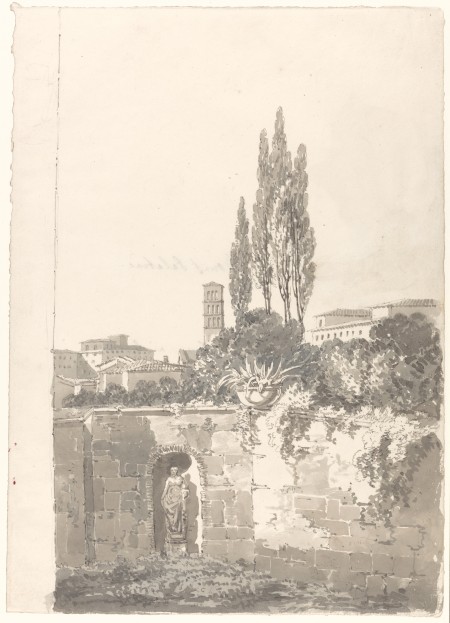
Rome: A View in the Farnese Gardens
Yale Center for British Art, New Haven

Rome: The Ludovisi Gardens
Private Collection

Rome: The View from the Corsini Gardens
Private Collection

Rome: A Distant View of the Basilica of St John Lateran
The Whitworth, The University of Manchester

Rome: St Peter’s, from a Nearby Terrace
Tate, London

Rome: St Peter's Square from the Colonnade
Tate, London

The Vatican: The Belvedere Viewed from the East beyond a High Wall
Tate, London

The Vatican: The Wall of the Giardino della Pigna and the Belvedere
Tate, London

Rome: St Peter's from Monte Mario
Harewood House, Yorkshire

St Peter's and the Vatican, from above the Arco Oscuro
Private Collection

Rome: The River Tiber from Monte Mario, Looking towards the Sabine Hills
Private Collection

The Roman Campagna, from the Villa Madama
Private Collection

Unidentified Fortifications on a Rocky Outcrop, Possibly on the Island of Capri
Tate, London

Tivoli, with the Falls of the River Aniene: The Grand Cascade
Victoria and Albert Museum, London

Tivoli: The 'Villa of Maecenas' and Part of the Town
Private Collection

Tivoli: The Grand Cascade Seen from a Terrace
Private Collection

Tivoli: The 'Temple of the Sibyl' Seen across the Gorge of the Aniene
Laing Art Gallery, Newcastle-upon-Tyne

Tivoli: The ‘Temple of the Sibyl’ and the Cascades Seen from Below
Yale Center for British Art, New Haven

A Distant View of Tivoli
Victoria and Albert Museum, London

Tivoli: The Rocca Pia, from the North West
Tate, London

Tivoli: The Rocca Pia, from the South West
Tate, London

An Archway through a Building, with a Round Tower
Tate, London

Tivoli: A Bridge and Gateway
Tate, London

Tivoli: A View through an Arch to the Cascade
Tate, London

Tivoli: Ancient Ruins, Known as the Temple of Bacchus, with the Tower of Santa Maria Maggiore
Tate, London

Tivoli: 'The Temple of the Sibyl'
Queensland Art Gallery, Brisbane

Tivoli: 'The Temple of the Sibyl', the Broken Side
Leeds Art Gallery

Tivoli: 'The Temple of the Sibyl', Seen from Below
Harvard Art Museums / Fogg Museum

Tivoli: 'The Temple of the Sibyl', Seen from Below
Tate, London

Tivoli: 'The Temple of the Sibyl'
Tate, London

Tivoli: The River Aniene, with 'The Temple of the Sibyl' Seen Above
Victoria and Albert Museum, London

Tivoli: The 'Villa of Maecenas’, Seen from an Elevated Viewpoint
The Huntington Library, Art Museum and Botanical Gardens, San Marino

Tivoli: The 'Villa of Maecenas' with Part of the Cascades
National Gallery of Canada, Ottawa

Tivoli: The 'Villa of Maecenas' and Part of the Cascades, Seen from Below
Metropolitan Museum of Art, New York

Tivoli: The View from the Gardens of the Villa d'Este, Looking towards Montecelio
Tate, London

Tivoli: The Villa d'Este, Looking South West
Yale Center for British Art, New Haven

Tivoli: The Gran Loggia of the Villa d'Este
Tate, London

Tivoli: A Mausoleum, Known as the Temple of Tosse
Tate, London

The Tomb of Plautus, near Tivoli
Tate, London

A Wooded Valley near Bex in Switzerland
Private Collection

Tivoli: The Valley of the Aniene with the ‘Villa of Maecenas’ and the Falls
Private Collection

Rocca di Papa, from Monte Cavo
Yale Center for British Art, New Haven

The Passionist Monastery on Monte Cavo
Tate, London

A Distant View of the Passionist Monastery on Monte Cavo
Tate, London

A Ruined Ancient Building, Probably a Mausoleum on the Appian Way
Tate, London

The Ruined Mausoleum of the Emperor Gallienus on the Appian Way
Tate, London

The Ruins of the Mausoleum of the Emperor Gallienus on the Appian Way
Tate, London

Unidentified Ruins, Possibly the Aqua Anio Novus Aqueduct, near Tivoli, Known as Pompey’s Tomb
Tate, London

Albano: A Ruined Building by a Stream
Tate, London

Albano: Part of the Ruins of the Ancient Baths of Caracalla, Known as Cellomaio
Tate, London

A Hermitage at Albano on the Appian Way
Tate, London

Albano: The Ruins of the Ancient Baths of Caracalla, Known as Cellomaio
Tate, London

Lake Albano, Viewed from the Bergantino
Private Collection

Albano: A Mausoleum, Known as the Tomb of the Horatii and Curatii
Tate, London

Albano: The Ruins of a Mausoleum, Known as the Tomb of the Horatii and Curatii
Tate, London

Lake Albano with Castel Gandolfo
Harvard Art Museums / Fogg Museum

Lake Albano, from Palazzolo
National Gallery of Scotland, Edinburgh

Ariccia: The Church of Santa Maria Assunta
Tate, London

Ariccia: Looking Up to the Church of Santa Maria Assunta
Tate, London

A Distant View of Ronciglione, near Lake Vico
Private Collection

An Unidentified View, Formerly Known as 'L'Arriccia'
Yale Center for British Art, New Haven

Ariccia: The Church of Santa Maria Assunta and the Chigi Palace
Birmingham Museums & Art Gallery

An Unidentified Convent at Nemi
Tate, London

Nemi: Unidentified Buildings Overlooking a Stream
Tate, London

An Unidentified Building, Known as 'The Capuchin Convent near Nemi'
Tate, London

Genzano: The Palazzo Sforza Cesarini
Tate, London

Lake Nemi, with Genzano and the Palazzo Sforza Cesarini
Victoria and Albert Museum, London

The Town of Nemi Overlooking the Lake
Tate, London

The Town of Nemi, from the Banks of the Lake
Leeds Art Gallery

Lake Nemi and the Town of Genzano
Walker Art Gallery, National Museums Liverpool

The Lake and Town of Nemi
Hereford Museum and Art Gallery

Lake Nemi, with Genzano in the Distance
Art Gallery of Ontario, Toronto

Lake Nemi
Private Collection

An Unidentified Castle by a River, Known as 'Orte'
Brighton Museum and Art Gallery

Lake Vico
British Museum, London

Lake Vico, from the Hill of Viterbo
Tate, London

Lake Bolsena
Tate, London

A Distant View of Tivoli Seen from the Valley of the River Aniene
Tate, London

A Distant View of Radicofani in Tuscany
Private Collection

Lake Trasimeno
Tate, London
The Banks of Lake Trasimeno
Private Collection

An Unidentified Waterfall, Possibly in Switzerland, Known as 'The Velino Falls'
National Gallery of Ireland, Dublin

The Ascent to the Marmore Falls (The Cascade of Terni)
Private Collection

The Bridge of Augustus, near Narni
Private Collection

A Distant View of Civita Castellana
Tate, London

An Unidentified View, Possibly at Civita Castellana
Tate, London

On the River Tiber, at Acqua Acetosa
Tate, London

A View on the River Tiber, North of Rome
Tate, London

Terracina, on the Coast between Rome and Naples, with the Temple of Jupiter Anxur
Tate, London

Gaeta, Seen across the Gulf from Formia
Tate, London

Buildings on the Coast at Posillipo, near Naples
British Museum, London

Naples: Santa Maria del Parto, Mergellina
Tate, London

Naples: Looking across the Bay towards Vesuvius from Mergellina
Tate, London

Baia Castle
Tate, London

The Temple of Venus at Baia
Tate, London

The Temple of Venus at Baia
Blanton Museum of Art, The University of Texas at Austin

The Bay of Baia, with Naples and Vesuvius in the Distance
Tate, London

An Unidentified Fortress, Probably Baia Castle
Tate, London

Naples: Castel Sant'Elmo and the Convent of San Martino
Tate, London

Naples: View over the City from the Royal Palace at Capodimonte
Tate, London

Vesuvius, from Torre Greco
National Gallery of Scotland, Edinburgh

An Unidentified Fort on a Cliff by the Sea
Tate, London

Capri: A View over the Eastern Promontory to the Bay of Salerno, with Steps Leading to the Castello Barbarossa
Tate, London

A Group of Buildings on a Low Cliff, near Naples
Tate, London

Lake Avernus
Private Collection

Solfatara, near Naples
British Museum, London

The Norman Tower at Maiori on the Coast near Salerno
Tate, London

An Entrance to the Roman Amphitheatre at Capua
Ashmolean Museum, University of Oxford

Vallombrosa Abbey
Tate, London

A Mill and a Two-Arched Bridge on the Road between Florence and Rome
Tate, London

A Five-Arched Bridge, on the Road between Florence and Rome
Tate, London
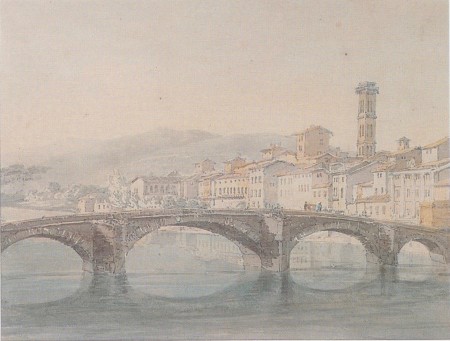
Florence: The Arno, with the Ponte alla Carraia
Private Collection

The Arno, Seen from the Pisa to Florence Road
Tate, London

The Lighthouse at Livorno (Leghorn)
The Huntington Library, Art Museum and Botanical Gardens, San Marino

On the Coast South of Genoa, near Lerici
Tate, London

A Coastal View of Sestri Levante, near Genoa
Private Collection

Vernazza, on the Coast near La Spezia
Private Collection

The Promontory of Portofino
Tate, London

An Unidentified Village on the Ligurian Coast, East of Genoa
Tate, London

A View of Nice, with Mont Alban Beyond
Private Collection

Verona, from the River Adige
Victoria and Albert Museum, London

A Ship off a Mountainous Coast, Known as 'Monaco'
Private Collection

Verona: The Church of San Giorgio in Braida on the River Adige
Private Collection

Lake Garda, from near Peschiera
Tate, London

An Unidentified Building with Mountains Beyond, Known as 'The Bishop’s Palace at Brescia'
Private Collection

Lake Maggiore
Tate, London

Bergamo, from the Banks of the River Serio
Private Collection

A Distant View of Bergamo, from the River Serio
Ashmolean Museum, University of Oxford

A Riverside Village, Possibly Gorle on the River Serio, near Bergamo
Private Collection

A Distant View of the Alps, Possibly from Modena, with a Church amongst Trees
Tate, London
Lake Walen, Looking North
Private Collection

A Distant View of the Alps, Taken from the Plains North of Turin
Tate, London

A Bridge near Castel del Bosco, on the Road between Pisa and Florence
Tate, London

An Unidentified View in the French Alps
Tate, London

Lake Mont Cenis
Tate, London

Fort de l'Écluse on the River Rhône
Tate, London

The Bridge at Bonneville in Savoy
Private Collection

The Convent of San Silvestro, near Monte Compatri
Victoria and Albert Museum, London

The View over the Bay of Baia to Ischia and Procida, from near the Scuola de Virgilio
British Museum, London

Posillipo: The Palazzo di Roccella, with the Palazzo Donn’Anna Beyond
Tate, London

A Castle beside a River, Possibly the Rocca Pia at Tivoli
Harewood House, Yorkshire
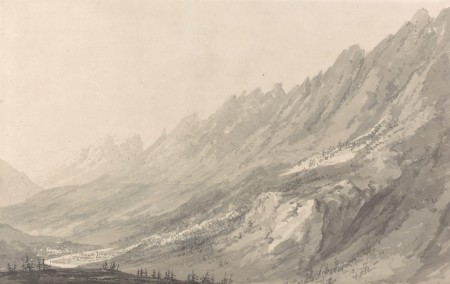
A Steep-Sided Valley, Possibly in the Tyrol
Yale Center for British Art, New Haven

The Arco Felice at Pozzuoli, the Ancient Entrance to Cumae
Private Collection

A Waterfall amongst Woods on a Mountainside
Tate, London

A Circular Temple on a Cliff Overlooking a Lake
Tate, London

The Lac de Joux
Private Collection

An Unidentified Lake Scene, Possibly in Switzerland
Leeds Art Gallery

A Rocky Gorge, between Chambéry and Les Échelles
Private Collection

A Convent Overlooking the Arno, near Castel del Bosco
Private Collection

A River Scene, Possibly in the Roman Campagna
National Gallery of Ireland, Dublin

An Alpine Scene, near Sallanches
Private Collection

The Bridge at Avignon
Private Collection

The Bay of Naples
Private Collection
Footnotes
- 1 The full diary entry, giving crucial details of the artists’ work at Monro’s house, is transcribed in the Documents section of the Archive (1798 – Item 2).
Revisions & Feedback
The website will be updated from time to time and, when changes are made, a PDF of the previous version of each page will be archived here for consultation and citation.
Please help us to improve this catalogue
If you have information, a correction or any other suggestions to improve this catalogue, please contact us.
About this Work
This view of ruins on the Palatine Hill, said eroneoulsy to be part of Emperor Nero’s Golden House, the Domus Aurea, is mounted in an album of watercolours that was bought by Joseph Mallord William Turner (1775–1851) at the posthumous sale of Dr Thomas Monro (1759–1833) (Christie’s, 28 June 1833, lot 78). The sixty-four drawings were the outcome of a unique collaboration between Girtin and Turner working together at Monro’s London home at the Adelphi. Here the artists were employed across three winters, probably between 1794 and 1797, to make ‘finished drawings’ from the ‘Copies’ of the ‘outlines or unfinished drawings of Cozens’ and other artists, amateur and professional, either from Monro’s collection or lent for the purpose. As the two young artists later recalled, Girtin generally ‘drew in outlines and Turner washed in the effects’. ‘They went at 6 and staid till Ten’, which may account for the generally monochrome appearance of the works, and, as the diarist Joseph Farington (1747–1821) reported, Turner received ‘3s. 6d each night’, though ‘Girtin did not say what He had’ (Farington, Diary, 12 November 1798).1
As with the majority of the Italian views in Monro’s album, it has not been possible to trace the source of the work. However, even though only a small proportion of the sketches that John Robert Cozens (1752–97) made during his stay in Italy from November 1776 through to March 1779 survive, it is still likely that one of the numerous ‘outlines or unfinished drawings’ that he executed during his time in Rome provided the model here. Monro’s posthumous sale may have contained only a few sketches by Cozens, but, as Kim Sloan has argued, the patron must have borrowed outlines or tracings from purchasers at the auction of the artist’s work held in July 1794, which included twenty-seven ‘books of sketches’ and many hundreds of drawings made on his travels (Sloan and Joyner, 1993, pp.81–82).
Despite the inscription identifying these monumental ruins as being part of ‘Nero’s Golden Palace’ no part of the ruined buildings that covered an area of about fifty hectares (123 acres) can be linked to this image. However, the semi-circular structure with its distinctive coffered ceiling also appears in a watercolour by Edward Lear (1812–88) painted in 1838 (see figure 1) and this has been identified as depicting part of the Emperor Domitian's palace on the Palatine Hill (late 1st century CE), looking towards the so-called Stadium. TG0540 appears to show the same edifice and it too is wrongly said to have been built for the Emperor Nero whose palace is well away from the Palatine and dates from earlier in the middle of the century.
The album containing this drawing was sold in 1833 as the work of Turner, but the cataloguer of the Turner Bequest, Alexander Finberg, thought that Girtin alone was responsible for the watercolours, whilst more recently Andrew Wilton has established their joint authorship (Finberg, 1909, vol.2, p.1227; Wilton, 1984a, pp.8–23). Identifying the division of labour within Monro School drawings is considerably helped, as here, when the colour washes leave much of the pencil work showing through. An architectural subject generally requires a more detailed underdrawing than a landscape, and in this case Girtin’s inventive and fluent hand is clearly apparent under Turner’s economical use of a simple monochrome palette. Indeed, there are some fine passages of pencil work that illustrate how suited Girtin’s broken line is to the picturesque depiction of architectural ruins.
1794 - 1797
Rome: The Ruins of Nero's Golden House, the Domus Aurea
TG0540